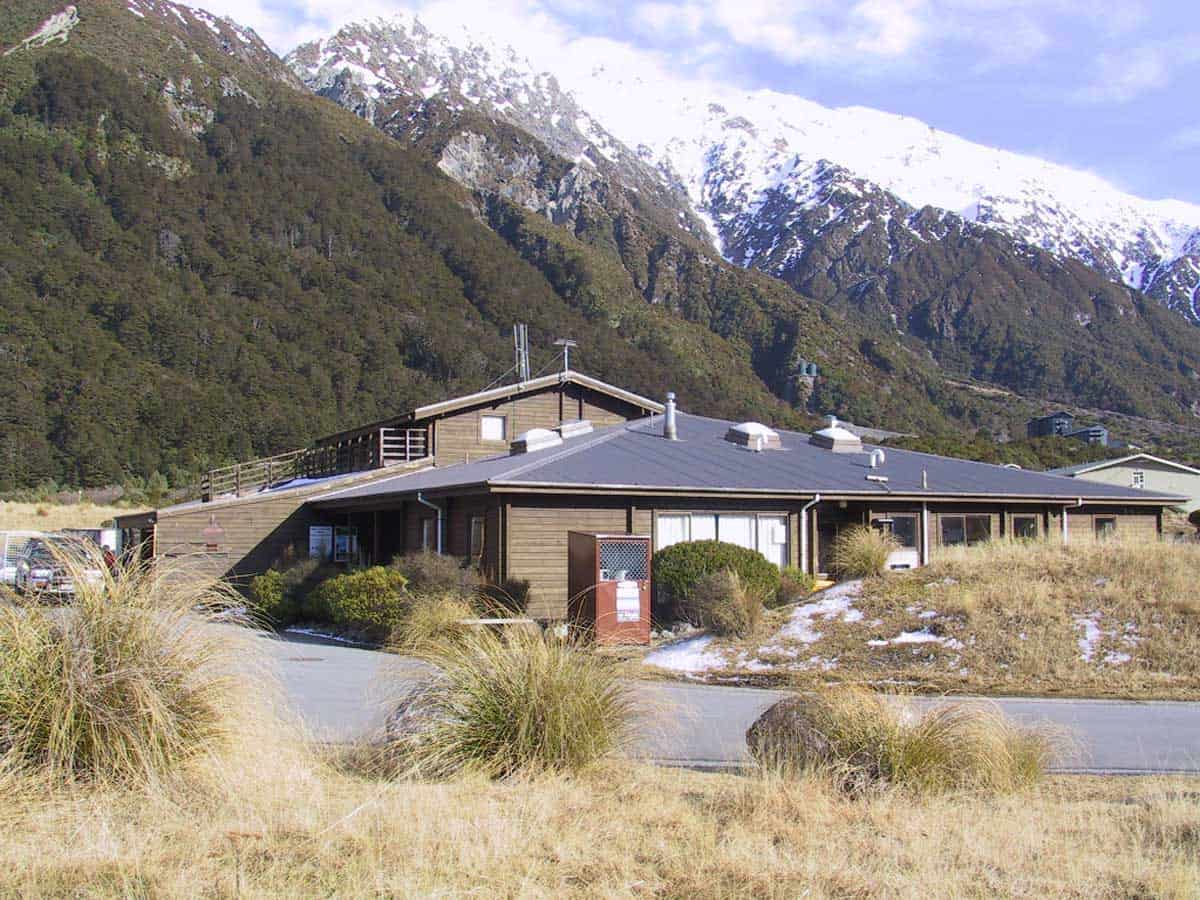
Imagine you are working inside a Secondary School in NZ. The phone rings, you pick it up and a voice says:
“…I’m very keen on education and especially like music. I’d like to talk to you about what the school is planning over the next ten to twenty years especially the campus and its buildings, and anything else coming up. I would like to talk about leaving something behind after I have gone. What matters to me is that the music keeps going here and is accessible, for my family and for other people’s. It means a great deal to me and I want to be sure it is going to happen.”
That call is not a fantasy. I have sat in rooms where it has happened. It is one of the best things that can happen in fundraising, but it is not common. When it does happen, the person who answers the phone may not have enough information, or know exactly what to do next.
Mostly, the people wanting to gift money and assets to causes they love when they are no longer here do not ring the charities to talk about it. These people often decide quietly, and the charity finds out much later.
What happens now in Aotearoa New Zealand
Last year over 37,000 New Zealanders died.
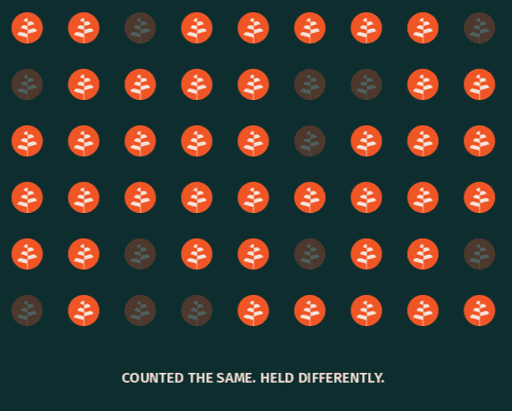
Just over half of us have a will, and by the time we are seventy, it will be 86 percent, which makes sense, because a will is one of those things we get to when ‘the end’ stops being quite as abstract.
If you made a will, then at some point after you die somebody will act on it. A lawyer, or your daughter, or the friend you asked to sort things out. They worked through the house, the KiwiSaver, the car, the small accounts you had forgotten about, and they came to the part where you said what you wanted.
Only six wills in every hundred name a charity.
If yours was one of them, then somewhere in Aotearoa New Zealand the recipient received a letter from a law firm telling them that a person they had never met had left them money. Sometimes it is a great deal of money. It happens more often than you might think.
There is no New Zealand research on how many gifts in wills come from people the charity already knew. The best evidence we have is British. When the legacy databases of sixteen large UK charities were examined, 14 percent of gifts had come from supporters who had told the charity one was coming. Another 35 percent came from recognised supporters who had never said a word about it. And 52 percent came from people apparently unknown to the charity altogether.
So, close to nine gifts in ten arrive from someone who never told the charity it was coming, and more than half from someone the charity had never heard of. Whether New Zealand is the same, we don’t know.
Dying, and the decisions that are made around it, are not reversible. This transition is precious and we should talk more about these things. It is important to say thank you, and for those who receive to hear the stories and get to know the people whose legacy they have a duty of care to uphold.
You possibly made one of the most considered decisions of your life, and the organisation you made it to only found out when you were no longer alive, and they couldn’t use the money, as the gift was very tightly tagged.
The gap this piece explores sits between two moments: the private decision and the gift that eventually arrives. What have we built, inside our not-for-profits and around them, to hold an intention for twenty or fifty or 100 years?
What the register shows
From 2007 until early 2016, registered charities recorded the value of gifts they received through wills as its own line on the annual return to the regulator. Nearly a decade of data.
In 2013 it came to $192.5 million across 778 returns. By 2015 it was $154.2 million across 813. The money is lumpy, and that matters. In 2013 eight charities each reported more than $5 million. In 2015, three did. So the fall is a handful of large estates, while the number of charities receiving something actually went up.
The last balance date on which anybody reported that number was 28 February 2016. New reporting standards applied to accounting periods beginning on or after 1 April 2015, which is why the series stops where it does.
Around three in every hundred registered charities received a gift in a will in any given year, sitting between 2.8 and 3.0 percent, and that share did not move across the whole series, even while the number of charities filing an annual return grew by a fifth.
What happens when someone asks
In Britain, a government trial ran through the telephone will-writing service of a large legal provider.
Where the will-writer said nothing at all about charity, just under five in every hundred people left a gift anyway.
Where they asked one plain question, would you like to leave any money to charity in your will, it was nearly eleven in a hundred.
Where they asked the same question and added a single line about what other people commonly do, it was more than fifteen in a hundred.
One sentence, and half as many again as the plain ask. The peer reviewed analysis put that step alone, from the plain question to the social one, at about a fifty percent lift.
Recent Australian work found that close to thirty in every hundred people would like to leave something to a charity. Fewer than five in every hundred are ever asked. Around six or seven actually do it.
New Zealand sits at six percent of wills. Britain sits at just under fourteen.
The distance between what people want and what actually happens is not a shortage of generosity. We have plenty of that.
What is coming
New Zealanders are expected to inherit around $1.6 trillion over the next twenty five years, and it has already started. New Zealand households held about $2.5 trillion between them as at March 2024. Deaths were a little over 37,000 in 2025, and official projections have that passing 40,000 in the early 2030s and 50,000 by the middle of the 2040s.
Roughly $27 billion passed through New Zealand estates in 2024. Charities received about $320 million of it. Bequests are 1.3 percent of all charitable income here, against 4.5 percent in Britain.
Analysis published last year models what happens if we lift the share of estates leaving something to charity to three percent, which is still below where other countries already sit. Within twenty years that is close to $2.5 billion a year, roughly eight times what arrives now.
That is a gap of more than two billion dollars a year between where current settings take us and what a still conservative three percent would produce. Asking is one of the few levers we know measurably changes what people do. The money moves either way.
Two gifts, two outcomes
Both of these are about people who wanted to leave something behind. In one, that wish was carried all the way through. In the other it was not, and nobody involved did anything wrong. I have put them side by side because the difference between them is not generosity, and it is not good faith. It is whether anything had been built to hold the promise.
One that went the way it should
In 1932, in Christchurch, a woman called Cora Wilding wanted young people to be able to get out into the country. She set about creating places where walkers and trampers could find a safe bed and a meal, the first of them around Banks Peninsula, and she wrote down what it was for.
That grew into an organisation that lasted ninety two years and at its height ran more than forty places to stay.
When Covid took the travel out of a travel organisation, the Board made the decision to close. Their rules said any money left over had to go to organisations doing something similar. Which ones those were is not a question a Board in that position can reasonably be expected to answer, and their advisers had not been through it before either.
We found them in the public register of charities. More than 1,800 possibilities, narrowed to 36 that genuinely matched what Cora had written down, then six who came and presented, and the members voting on where it went. In May 2025 the money was distributed. Around $2.8 million, to a conservation trust, an outdoor education centre, a foundation working on sustainability, and a bush sanctuary.
A woman wrote down what she wanted in 1932 and it was delivered in 2025, ninety three years later, to people she never met, doing the thing she cared about.
The public register made the final search possible. But the deeper instrument was the constitution itself. The written purpose and objects. Alongside values and intent. This is what these records are actually for. They are not filing.
One that was harder
In 1983 a Marlborough farmer, Gordon Holmes, and his wife gave away their farm.
Argyle is 433 hectares in the Wairau Valley. He had taken it, in his own words, from a desert and turned it into a farm, and he was proud of it. They put it into a charitable foundation, because they wanted agricultural students to learn on it. He carried on farming it himself until 1999, leasing it back from the foundation he had given it to.
Thirty six years later, in 2019, the farm went to tender. It was worth about $2.7 million by then. It had been leased out for decades and, as the newspaper reporting it put it, it had never fulfilled its intended purpose.
Gordon Holmes was 94.
I do not think anyone was careless. The distance from campus had always been the difficulty, students could not easily get there, and the money was to go towards scholarships, a research fund and a prize for the Marlborough sheep farmer of the year. There would be a tree planted, and a heritage building named after him. Reasonable people doing reasonable things, and genuinely wanting to make good.
His neighbour, John Moffitt, built a bench and had a brass plaque made, and put them on the boundary. The plaque reads:
I once had a dream for my life’s work but somehow the benefactors overlooked it?
It is not true that nothing came of it. After the farm was sold, a scholarship was established in 2020, named after the farm, alongside a research fund and support for a Marlborough farming award. But the farm itself, the thing he actually gave and the thing he actually pictured, was never used the way he meant it. Every part of this was accepted with real gratitude. Accepting a gift and being able to receive one are not the same thing.
What we cannot see
The register is not the sector.
Registration under the Charities Act is voluntary. A sports club, a hobby group, a marae, a union, an advocacy organisation, a regional promotion body, many of them never register, and depending on their legal form and purpose some can receive tax treatment or donee status without ever appearing on the register.
Statistics New Zealand last counted the whole not-for-profit sector for the year to March 2018 and found 115,770 organisations. There are around 29,200 charities on the register today. The two are counted on different bases and cannot simply be subtracted from one another. What can be said is that the part of the sector we are able to see is the smaller part of it.
They are also not all doing the same thing. On the register’s own data, about one in eight registered charities records making grants to other organisations as its main activity. Add those making grants or loans to individuals, and those providing other finance, and it is around one in six. So a meaningful part of that 29,200 is money moving between organisations on the register, rather than out to the work.
The register is also one list among several. Nearly six in ten registered charities are also charitable trusts incorporated under the Charitable Trusts Act, which is a separate register held by the Companies Office. One in five are incorporated societies, which is another. The Companies Office holds six not-for-profit registers in all, and publishes a running total for almost none of them.
The last full national study of New Zealand giving looked at 2014. It estimated, from a survey, that 6.5 percent of active charities had received a bequest, worth $157.1 million. The returns those same charities filed record 3.2 percent, and $183.7 million. Twice as many charities estimated as reported any, and $26 million less money than actually arrived. Both numbers were describing the same year.
We are now more than a decade without an independent national picture of what people give here in Aotearoa.
The money is not missing because nobody gave it. It is missing because we stopped counting, and because we only ever counted part of it in the first place. A sector that cannot see itself whole cannot plan for what is coming, and cannot notice what is already arriving.
What we need to build
While we do have bequest managers, gifts in wills managers, planned giving managers and legacy managers, we don’t have enough.
Between a third and two fifths of our professional fundraisers work in organisations with two or fewer paid fundraisers, and across three national surveys roughly half had been in their current role under two years. The workforce is also overwhelmingly women, 83 percent by 2020, with a median pay gap that had grown to $15,000. This kind of giving is best cared for by specialised people who have five to ten years within the organisation. We have built a workforce that moves in two.
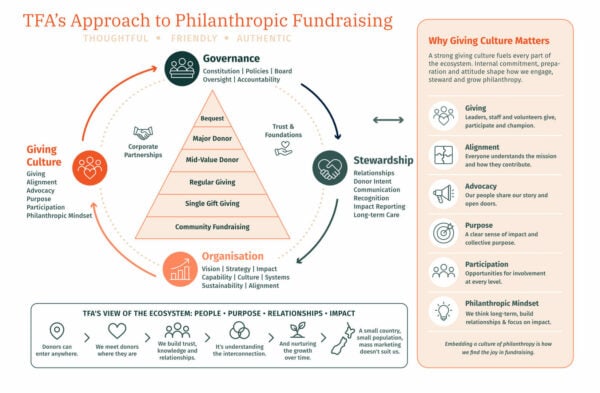
Getting ready to steward and dignify the legacy of those who give, and to honour and share its impact, is a privilege and it is a duty. It is also slow, quiet and unglamorous. It is governance and policy and systems, and someone having the confidence to sit with a person and hear them tell stories of a rich and interesting life.
This is not a piece asking charities to try harder. It is a piece asking the rest of us to make it easier.
If you sit on a Board, put this on an agenda this year rather than in three. If you write wills or advise people on their affairs, it is important the charity is communicated with. And if you are simply someone with a will and have an intent to leave money or assets to a charity, ring them, or write them a love letter. It will make both of your days.
When a donor understands what an organisation is trying to do, and trusts that it can, generosity becomes much easier.